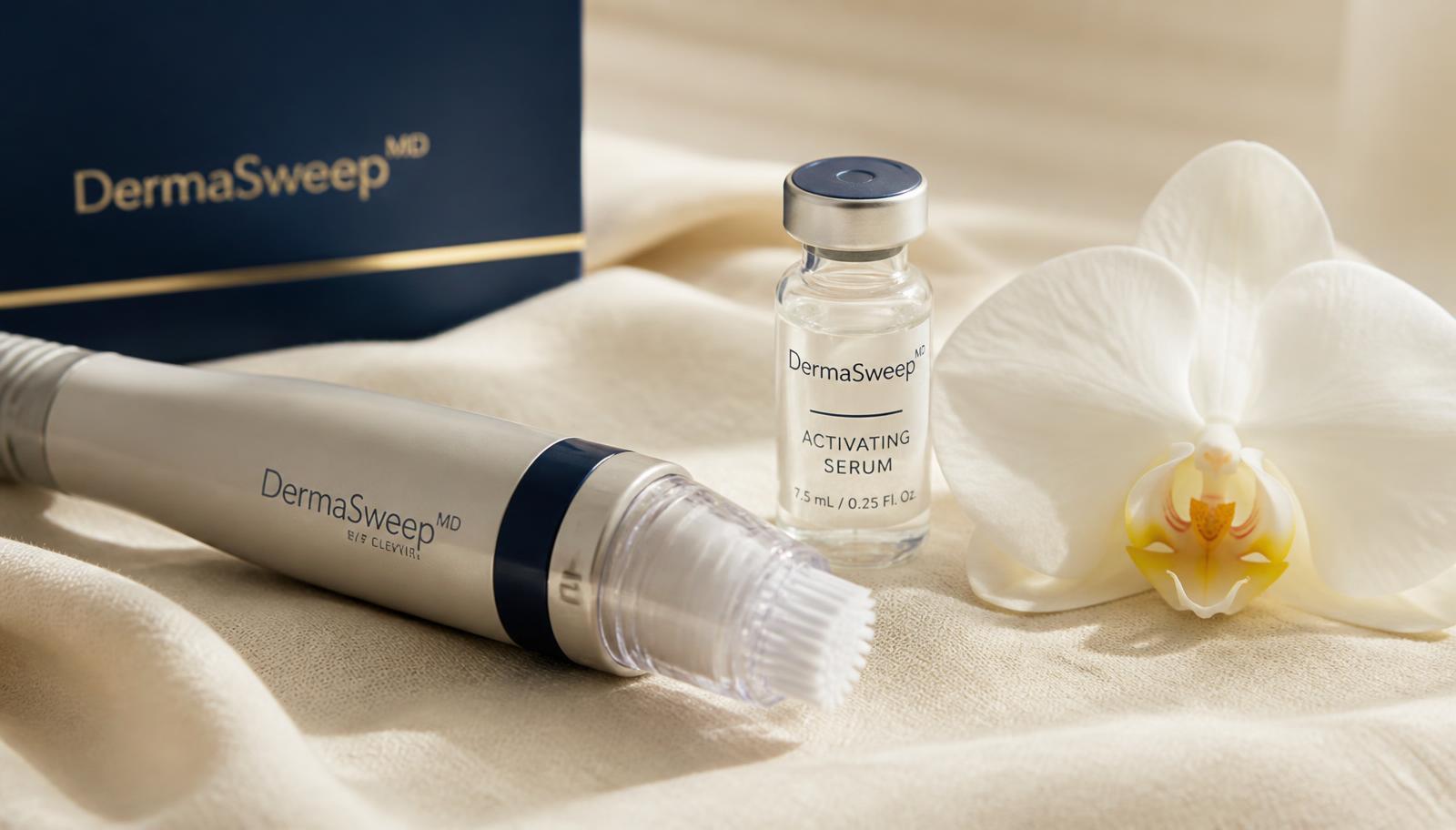
If your skin looks dull, feels rough, or never quite responds to the products you spend money on, the problem is often not the products — it is the layer sitting on top of them. Dead cells, sunscreen residue, and oil build a barrier that blocks absorption and scatters light, so skin reads tired even when it is healthy. DermaSweep MD solves both halves of that problem in a single 30-minute visit: it lifts the buildup away with a precision bristle tip, then pushes a targeted serum into the freshly cleared surface while it is at its most receptive.
At Remedy+ in Grand Rapids, DermaSweep MD is one of our most requested treatments for exactly that reason — it delivers an immediate, visible refresh with no peeling, no redness that lingers, and no calendar clearing. This guide covers how the technology works, who benefits most, what a session feels like, how results build over a series, and how DermaSweep compares to the other resurfacing options on our menu.
Table of Contents
- What Is DermaSweep MD?
- How the Technology Works
- Choosing Your Infusion Serum
- Who Is a Good Candidate?
- What a Session Is Actually Like
- Results and Timeline
- Aftercare and What to Avoid
- DermaSweep vs. HydraFacial, Peels, and Microneedling
- Combining DermaSweep With Other Treatments
- Cost and Treatment Plans
- Frequently Asked Questions
What Is DermaSweep MD?
DermaSweep MD is a medical-grade resurfacing system often described as wet microdermabrasion. Traditional microdermabrasion blasted crystals across the skin and vacuumed them back up — effective, but abrasive, messy, and hard to control around delicate areas. DermaSweep replaces the crystals with a rotating bristle tip and adds a second step that older devices never had: simultaneous infusion of a liquid solution chosen for your specific concern.
That two-step design — precision exfoliation plus epi-infusion — is what separates it from a standard facial. A facial cleans and hydrates the surface. DermaSweep resets the surface and then delivers active ingredients into skin that can finally absorb them.
It is a non-invasive, non-laser, non-chemical treatment. Nothing is injected, no heat is applied, and there is no wound-healing cascade to recover from. That makes it one of the safest resurfacing options available and one of the very few appropriate for essentially every Fitzpatrick skin type, including deeper skin tones where heat- and acid-based treatments carry a risk of post-inflammatory hyperpigmentation.
How the Technology Works
The DermaSweep handpiece pairs a medical-grade bristle tip with adjustable vacuum pressure. Three things happen at once as the provider passes it across your face:
1. Mechanical exfoliation
The bristle tip sweeps away the stratum corneum — the outermost layer of dead, light-scattering cells. Tips come in multiple grades, from very soft to more aggressive, so the intensity is matched to your skin rather than applied uniformly. Sensitive cheeks can get a gentle tip while a congested T-zone gets a firmer one in the same session.
2. Controlled vacuum lift
The vacuum both removes the debris and gently lifts the skin toward the tip. That lift increases circulation and lymphatic movement in the treated area, which is part of why skin looks flushed with color and slightly plumper immediately afterward rather than stripped.
3. Epi-infusion
Immediately after exfoliation, a liquid infusion is delivered under light pressure through the same system. With the barrier of dead cells removed, penetration of those actives is dramatically better than topical application at home. This is the step that turns a good exfoliation into a targeted treatment.
Choosing Your Infusion Serum
The exfoliation is largely the same for everyone; the infusion is where the treatment becomes personal. During your consultation we select based on your primary concern:
- Hydrating infusions — hyaluronic acid-based, for dehydrated, tight, or flaky skin, and for anyone coming off a Michigan winter or a summer of sun exposure.
- Brightening infusions — vitamin C and antioxidant blends for dullness, uneven tone, and early sun damage.
- Clarifying infusions — salicylic and other exfoliating acids for oily, congested, or acne-prone skin, especially blackheads across the nose and chin.
- Soothing infusions — anti-inflammatory formulas for redness-prone or reactive skin that still needs exfoliation.
- Firming and peptide infusions — for mature skin where fine lines and loss of surface resilience are the priority.
Because the serum changes visit to visit, your plan can follow your skin. A patient may run clarifying infusions through humid summer months and switch to hydrating and brightening formulas once indoor heating starts drying everything out.
Who Is a Good Candidate?
DermaSweep MD is appropriate for a remarkably wide range of patients. It is a strong fit if you are dealing with:
- Dull, tired-looking skin that has lost its reflectivity
- Rough or uneven texture, including bumpy forehead or cheeks
- Congested pores, blackheads, and mild to moderate acne
- Fine lines and early photoaging
- Uneven tone, sun spots, and mild hyperpigmentation
- Products that "sit on top" of the skin instead of absorbing
- Keratosis pilaris and rough patches on the body
- An event in a week and no time for downtime
It is also one of the few resurfacing treatments that is generally safe during pregnancy and while breastfeeding, since no chemical peeling agents, retinoids, or injectables are involved — though we always confirm with your OB first.
DermaSweep is not the right first step if you have active cystic acne, an open cold sore, sunburn, eczema flares, or an active skin infection in the treatment area. We would treat those first. Deeper wrinkles, significant laxity, and true acne scarring also need a collagen-remodeling treatment such as microneedling or radiofrequency skin tightening — DermaSweep improves the surface, not the structure beneath it.
What a Session Is Actually Like
Plan on about 30 to 45 minutes from cleanse to sunscreen.
Consultation and cleanse. Your provider reviews your history, current products, and goals, then double-cleanses to remove makeup, oil, and SPF.
Tip selection. Based on your skin type and sensitivity, the provider chooses the bristle grade and vacuum setting — and may vary both by zone.
The sweep. Passes are made in a systematic pattern across the forehead, cheeks, nose, chin, and often the neck. Most patients describe it as a firm, slightly ticklish brushing sensation with mild suction. It should never feel like scraping or burning. No numbing is needed.
Extractions, if needed. Congestion that has been loosened by the sweep is far easier to clear, so this step is quicker and less uncomfortable than in a traditional facial.
Infusion. Your chosen serum is delivered through the handpiece. This part is genuinely pleasant — cool and soothing.
Finish. A hydrating layer and broad-spectrum SPF go on before you leave. Freshly exfoliated skin is more photosensitive, and sunscreen is non-negotiable for the next several days.
You can wear makeup the same day if you need to, though most patients skip it for a few hours simply because their skin already looks good.
Results and Timeline
Immediately: Skin looks brighter and feels noticeably smoother. There may be light pinkness for 30 to 60 minutes, similar to a brisk walk in cold air.
Days 1–3: The refreshed look peaks. Makeup applies more evenly, and serums absorb faster. This is why we schedule DermaSweep two to three days before weddings, photos, and events rather than the morning of.
Weeks 2–4: A single treatment's glow softens as your natural cell turnover cycle completes — roughly 28 days for most adults, longer as we age. This is the point where maintenance matters.
After a series of 4–6 treatments: Cumulative change becomes obvious. Tone evens out, congestion reduces, texture refines, and fine lines look softer because the surface is reflecting light properly again. Most patients settle into a treatment every four to six weeks, matched to their turnover cycle.
DermaSweep is a maintenance treatment, not a one-time correction. Patients who commit to a rhythm see meaningfully better skin than patients who come once before a wedding.
Aftercare and What to Avoid
Aftercare is simple, but skipping it wastes the treatment:
- Wear SPF 30+ daily and reapply. This is the single most important step.
- Skip retinoids, glycolic and salicylic acids, and physical scrubs for 3–5 days.
- Avoid saunas, hot yoga, and heavy sweating for 24 hours.
- Hydrate generously with a gentle moisturizer — freshly exfoliated skin drinks it in.
- Do not pick at any residual congestion that surfaces in the days after.
- Delay waxing in the treated area for at least a week. If hair removal is part of your routine, our laser hair removal team can help you sequence the two.
DermaSweep vs. HydraFacial, Peels, and Microneedling
These treatments overlap, but they solve different problems.
DermaSweep MD vs. HydraFacial
Both are non-invasive, no-downtime treatments that exfoliate and infuse. HydraFacial uses vortex suction with a liquid spiral tip and is exceptional for hydration and gentle deep cleansing. DermaSweep uses a physical bristle tip, which gives the provider more direct control over exfoliation depth — often the better choice for rougher texture, keratosis pilaris, and skin that needs more mechanical work. Many of our patients alternate between the two.
DermaSweep MD vs. Chemical Peels
Chemical peels use acids to dissolve bonds between cells and can reach deeper, making them stronger for melasma, stubborn pigment, and sun damage. The tradeoff is visible flaking for several days and a higher sensitivity profile. DermaSweep works mechanically at the surface with no peeling phase. A common strategy: peels seasonally for correction, DermaSweep monthly for maintenance.
DermaSweep MD vs. Microneedling
Different depth, different goal. Microneedling creates controlled micro-injuries to trigger collagen production — the right tool for acne scarring, enlarged pores, and true textural remodeling, with two to three days of redness. DermaSweep does not injure the skin and does not remodel collagen; it perfects the surface. Patients frequently run both, spacing DermaSweep about two weeks away from microneedling sessions.
DermaSweep MD vs. an at-home scrub
Home scrubs are uncontrolled. Grit size varies, pressure varies, and over-scrubbing damages the barrier — creating the exact dullness and sensitivity people are trying to fix. A medical device with graded tips and calibrated vacuum removes the guesswork.
Combining DermaSweep With Other Treatments
DermaSweep is a natural partner to nearly everything on our menu:
- Before Botox or dermal fillers: we typically do DermaSweep first, then inject at a separate visit, so smooth skin and refreshed volume land together. See our complete guide to injectables for how those treatments fit into a plan.
- With IPL PhotoFacial: IPL targets pigment and redness in deeper layers while DermaSweep clears the surface — schedule them one to two weeks apart.
- As part of the Love Your Face membership: members can choose DermaSweepMD sessions as part of their annual treatment allotment, which is the most economical way to maintain a monthly cadence.
- Within a broader anti-aging plan: our top anti-aging tips article maps where surface treatments fit alongside collagen stimulation and injectables.
Cost and Treatment Plans
DermaSweep MD at Remedy+ starts at $149 per treatment, with pricing varying by infusion and any add-on areas such as the neck, chest, or hands. Because results are cumulative, most patients do best on a series of four to six treatments spaced four to six weeks apart, then transition to maintenance.
If a series is part of your plan, the Love Your Face membership bundles DermaSweep with peels, IPL, microneedling, and skin tightening at a substantially lower annual cost than paying per visit, and financing is available through Cherry and PatientFi with 0% APR options.
Ready to See What Your Skin Looks Like Underneath?
Most patients are surprised by how much brightness was hiding under a layer of buildup. If your skin has been looking flat, feeling rough, or refusing to absorb the products you already own, DermaSweep MD is a low-risk, high-return place to start.
Book a consultation at Remedy+ in Grand Rapids and we will assess your skin, choose the right tip and infusion, and build a cadence that fits your calendar and budget.