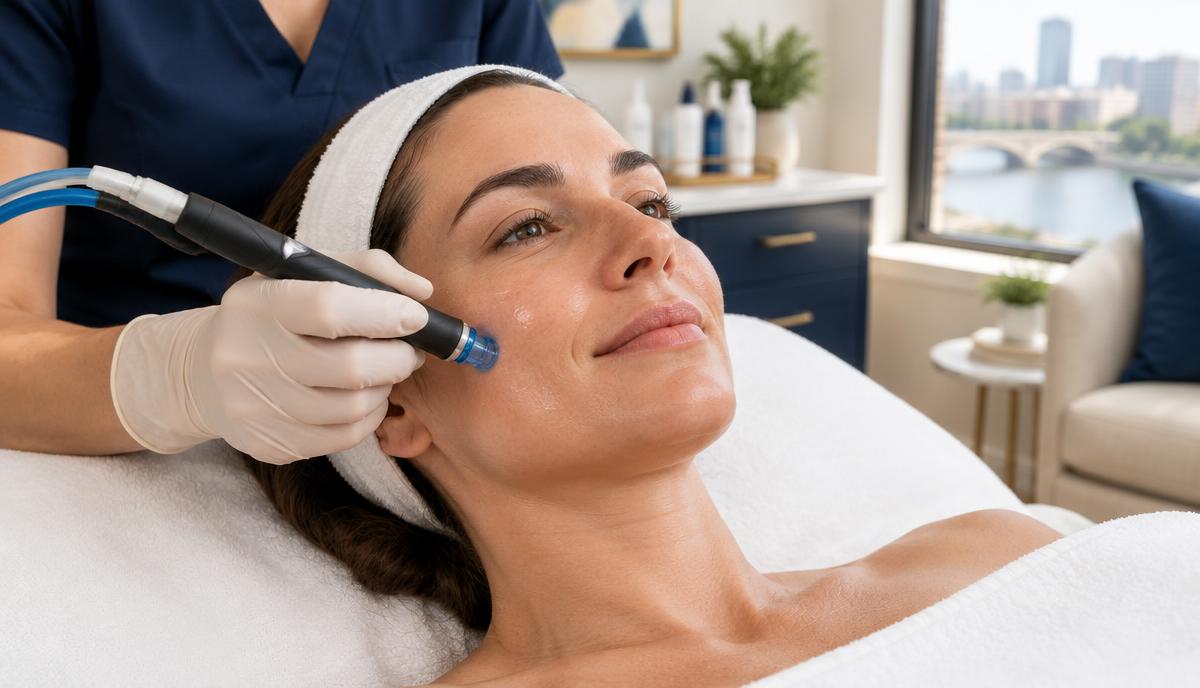
Oily skin creates a frustrating contradiction: your face can look shiny by midday and still feel tight, rough, or dehydrated after cleansing. Add blackheads, visible pores, and recurring breakouts, and it is easy to assume the answer is a harsher scrub or a product that strips away every trace of oil. In practice, that approach can leave the skin uncomfortable without addressing the buildup inside congested pores.
A HydraFacial™ treatment takes a different approach. It combines controlled exfoliation, suction-assisted extraction, and hydration in one appointment. For the right person, that can make oily or congestion-prone skin look cleaner, smoother, and more balanced without the interruption associated with a deeper resurfacing procedure. But HydraFacial is not a cure for every form of acne, and it cannot erase established acne scars.
This guide explains what a HydraFacial can realistically do for acne-prone and oily skin, when another treatment may be more appropriate, and how we customize care at Remedy+ Hair Restoration & Medical Spa in Grand Rapids.
Table of Contents
- The quick answer
- Why oily skin becomes congested
- How HydraFacial works for clogged pores
- What HydraFacial can—and cannot—do
- Customizing treatment for oily skin
- Who is a good candidate?
- What to expect at your appointment
- HydraFacial aftercare for acne-prone skin
- How often to schedule treatment
- HydraFacial versus other acne-focused treatments
- HydraFacial in Grand Rapids
- Frequently asked questions
The Quick Answer: Is HydraFacial Good for Acne-Prone Skin?
HydraFacial can be a useful option for people whose main concerns are surface oil, blackheads, clogged pores, dullness, or dehydration. Its cleansing and suction-assisted extraction steps remove surface debris and help clear material from pores, while the final hydration step supports a fresh, comfortable finish.
It is not the right answer for every breakout. Painful cysts, widespread inflammation, a sudden acne flare, or acne that may require prescription care should be evaluated before treatment. Aggressive passes over irritated lesions can be counterproductive. A consultation helps determine whether to proceed, adjust the treatment, avoid specific areas, or choose a different plan.
It also helps to separate active acne from acne scars. HydraFacial may improve the temporary look of dull, rough, or congested skin, but depressed acne scars involve structural changes below the surface. Treatments designed to stimulate remodeling, such as microneedling, may be more relevant after active breakouts are controlled.
Why Oily Skin Becomes Congested
Sebum is not the enemy. This natural oil helps protect the skin barrier. Congestion develops when oil, dead skin cells, and other debris collect within a pore. The mixture can form an open comedone, commonly called a blackhead, or a closed comedone, often called a whitehead. Inflammation and acne-causing factors can make the picture more complicated.
That is why simply drying the surface is not always helpful. An astringent may temporarily reduce shine, but it does not provide a complete strategy for exfoliation, extraction, hydration, and home care. Acne-prone skin can also be dehydrated, especially when a routine includes strong cleansers, exfoliating acids, retinoids, or other active products.
A well-planned facial should respect both sides of the problem: clearing excess buildup without treating the skin barrier as something to scrub away.
How HydraFacial Works for Clogged Pores
HydraFacial uses a specialized handpiece and patented vortex technology to move through cleansing, exfoliation, extraction, and serum delivery. The experience is different from a traditional facial built mainly around steam and manual extractions.
1. Cleanse and exfoliate
The opening phase removes surface debris and loosens dead skin cells. This creates a cleaner path to the pore and can immediately improve the look of dull or rough skin. The intensity is selected for the person in front of us rather than applied as a one-setting-fits-all protocol.
2. Loosen buildup
A customizable peel step helps prepare congested areas for extraction. Your provider considers sensitivity, current products, recent procedures, and the condition of active breakouts before deciding how to treat the skin.
3. Extract with vortex suction
The spiral tip and controlled suction help lift debris from pores. Many people choose HydraFacial specifically because this step can address congestion without relying exclusively on repeated manual squeezing. The nose, chin, and other oil-prone areas can receive focused attention when appropriate.
4. Replenish hydration
After exfoliation and extraction, the treatment delivers hydrating serums. This matters for oily skin because oil production and water content are not the same thing. Skin can be oily and dehydrated at once. Finishing with hydration supports a smoother appearance instead of leaving the face feeling stripped.
What HydraFacial Can—and Cannot—Do for Acne
Clear expectations make it easier to decide whether the treatment fits your goal.
HydraFacial may help with:
- Surface congestion: cleansing, exfoliation, and suction-assisted extraction can help remove buildup from clogged pores.
- Blackheads: the extraction step can focus on areas where visible comedones commonly collect.
- Excess surface oil: removing accumulated debris may leave the complexion looking cleaner and less congested.
- Roughness and dullness: exfoliation can create a smoother, brighter-looking surface.
- Dehydration: customized serum delivery restores hydration after the cleansing and extraction phases.
- Maintenance: recurring appointments can complement a consistent home routine when your provider recommends them.
HydraFacial does not:
- Cure acne: breakouts can involve several factors, and a facial does not replace medical evaluation or prescribed treatment.
- Erase pitted acne scars: deep or depressed scars generally require a treatment plan aimed at structural remodeling.
- Guarantee pore shrinkage: pores do not permanently open and close. Removing buildup can make them look cleaner and less noticeable.
- Replace daily care: even an excellent in-office treatment cannot compensate for an irritating or inconsistent routine.
- Suit every active flare: inflamed, tender, infected, or compromised skin may need to settle before a facial is appropriate.
If your priorities include active breakouts, scars, redness, and pigmentation at the same time, read our Grand Rapids skin-treatment comparison. It explains why one concern may call for HydraFacial while another is better matched to a peel, IPL, microneedling, or DermaSweep.
How We Customize HydraFacial for Oily or Breakout-Prone Skin
Two people can both say they have oily skin and still need different treatment plans. One may have resilient skin with blackheads around the nose. Another may be dehydrated from acne products, reactive around the cheeks, and oily through the T-zone. A third may have active inflammatory breakouts that should not receive the same exfoliation or suction.
At Remedy+, the HydraFacial menu includes Signature, Deluxe, and Platinum experiences. A Signature treatment centers on cleansing, extraction, and hydration. Deluxe adds a personalized booster and LED light therapy. Platinum adds lymphatic drainage to the Deluxe steps. The best level depends on your skin, goals, and what the provider sees that day—not on choosing the longest menu item automatically.
Customization can include:
- selecting an exfoliation level suited to your current sensitivity;
- spending additional attention on congested areas while avoiding irritated lesions;
- choosing a booster intended for concerns such as oil and pore congestion;
- including LED light therapy with an eligible treatment level;
- adjusting the plan around recent injectables, peels, lasers, or other facial procedures; and
- building a realistic interval between treatments rather than overtreating the skin.
Who Is a Good Candidate?
You may be a good candidate when your skin is generally healthy and your main concerns include blackheads, visible congestion, surface oil, dullness, mild roughness, or dehydration. HydraFacial can also suit someone who wants a refreshed appearance without planning around visible peeling.
Tell your provider about active rashes, infections, open skin, cold sores, sunburn, recent facial procedures, allergies, pregnancy, nursing, and all topical or oral medications. Also share the exfoliants and acne products you use at home. These details can change the timing or customization of treatment.
If you have painful cystic acne, extensive inflammation, or breakouts that are worsening quickly, begin with an evaluation rather than assuming extraction is the answer. The safest next step may be to calm the skin, coordinate medical acne care, or avoid treating certain areas.
What to Expect During a HydraFacial Appointment
A standard HydraFacial at Remedy+ generally takes about 30 to 45 minutes, with additional time possible for selected enhancements. Your visit starts with a review of your current skin, goals, home products, and recent treatments. That conversation is especially important for acne-prone skin because sensitivity can change from week to week.
During treatment, the handpiece moves across the skin in controlled passes. Most people describe a wet, cool sensation and light suction. Congested zones may receive more focused work, but the goal is not to chase every pore aggressively. After the final serum step, the skin commonly looks fresh and hydrated right away.
HydraFacial is known as a low-downtime treatment, but low downtime does not mean that every person will react identically. Temporary pinkness or sensitivity can occur. If you are planning treatment before a wedding, photography session, or another important event, schedule a first appointment early enough to learn how your own skin responds.
HydraFacial Aftercare for Acne-Prone Skin
Aftercare should be simple. Follow the instructions your provider gives you, because they may be adjusted to the strength of your treatment and your existing routine.
- Keep hands away from freshly treated skin and do not pick at blemishes.
- Use a gentle cleanser and moisturizer rather than adding extra scrubs.
- Wear broad-spectrum sunscreen and limit unnecessary sun exposure.
- Use clean pillowcases, makeup brushes, towels, and anything else that regularly touches your face.
- Wait to restart strong exfoliating products or other active ingredients until your provider says your skin is ready.
- Avoid stacking unplanned treatments on newly exfoliated skin.
More is not better after a facial. The treatment has already exfoliated the surface; immediately adding several acids, scrubs, or retinoids can create avoidable irritation. A calm, consistent routine usually serves acne-prone skin better than reacting to each blemish with another aggressive product.
How Often Should You Get a HydraFacial for Oily Skin?
Many patients use HydraFacial as a monthly maintenance treatment. That cadence may help manage recurring congestion while supporting hydration, but it is not a universal prescription. The right interval depends on sensitivity, the severity of breakouts, home care, season, and any other procedures in your plan.
One treatment can create a cleaner, more hydrated appearance, but recurring acne should not be judged by a single good skin day. If breakouts continue, the plan should be reassessed rather than simply scheduling more frequent extractions. Your provider may recommend another facial approach, a different procedure, changes to your routine, or medical evaluation.
For a broader explanation of treatment levels, boosters, benefits, and scheduling, see our complete HydraFacial guide.
HydraFacial Versus Other Treatments for Breakouts and Acne Scars
HydraFacial vs. chemical peel
HydraFacial emphasizes cleansing, extraction, and hydration with little interruption to your routine. A chemical peel uses a selected solution to create controlled exfoliation and may be considered for concerns such as acne, surface discoloration, and rough texture. Peels can involve visible flaking and more aftercare, depending on the formulation. Neither option should be chosen solely because it sounds stronger; the condition of your skin and the result you want should guide the decision.
HydraFacial vs. microneedling
HydraFacial works primarily at the surface and within congested pores. Microneedling creates controlled microchannels intended to stimulate a remodeling response. That makes microneedling for acne scars and uneven texture a different category of treatment. It is generally considered after active acne is appropriately controlled, and it involves more recovery than a HydraFacial.
HydraFacial vs. DermaSweep
Both treatments combine exfoliation with topical infusion, but the technology differs. DermaSweep MD uses a bristle-tip system with selected infusions, while HydraFacial uses its spiral tip and vortex suction for cleansing and extraction. Preference, sensitivity, and the type of surface buildup can help determine which experience is a better match.
Can treatments be combined?
Sometimes—but timing matters. A provider may use HydraFacial as part of a longer skin plan that also includes chemical peels, microneedling, or other corrective treatments. That does not mean every procedure belongs in the same visit. Appropriate spacing helps avoid unnecessary irritation and lets us evaluate what each treatment contributes.
Choosing a HydraFacial in Grand Rapids
The best facial is not simply the one with the most steps. It is the one selected after someone looks closely at your skin, asks what you use at home, and understands whether your priority is blackheads, oil control, hydration, active acne, post-acne discoloration, or scarring.
At Remedy+ Hair Restoration & Medical Spa, we customize HydraFacial treatments for patients in Grand Rapids and surrounding West Michigan communities. If HydraFacial is not the best match for the way your acne is presenting, we can explain why and discuss another starting point.
Ready to build a plan for clearer, more balanced-looking skin? Schedule a consultation with Remedy+ or call (616) 214-7228.